Why the vent matters
A dryer must move warm, moist air outdoors. When the exhaust path becomes restricted, drying takes longer and heat can build around the appliance and duct.
The route matters as much as the dryer. Long runs, multiple bends, crushed flexible connections and restrictive exterior covers can reduce airflow even when the lint screen is cleaned after every load.
- Keep the lint screen clean after each load
- Do not push the dryer tightly against the connection
- Make sure the exterior termination opens freely
Warning signs to act on
One slow load does not always mean a blocked vent, but repeated long cycles deserve attention. Excess heat, weak airflow outdoors, lint around the termination and burning or musty smells are stronger warning signs.
If the appliance or laundry room becomes unusually hot, stop operating the dryer until the cause is understood. Cleaning addresses the exhaust path; an appliance fault may still require separate service.
- Clothes need a second cycle
- Dryer or laundry room feels unusually hot
- Exterior airflow is weak
- Lint collects behind the dryer or outdoors
How often to clean
Annual cleaning is a useful starting point for many homes, but there is no single interval for every installation. A short, straight vent used by a small household may behave differently from a long roof-exiting run serving daily laundry.
Frequency should reflect use, vent length, number of bends, pets, fabric types and previous buildup. After cleaning, note how long loads take so future changes are easier to spot.
- Higher use can require more frequent service
- Long or complex runs deserve closer monitoring
- Document the service date and drying performance
What professional service should address
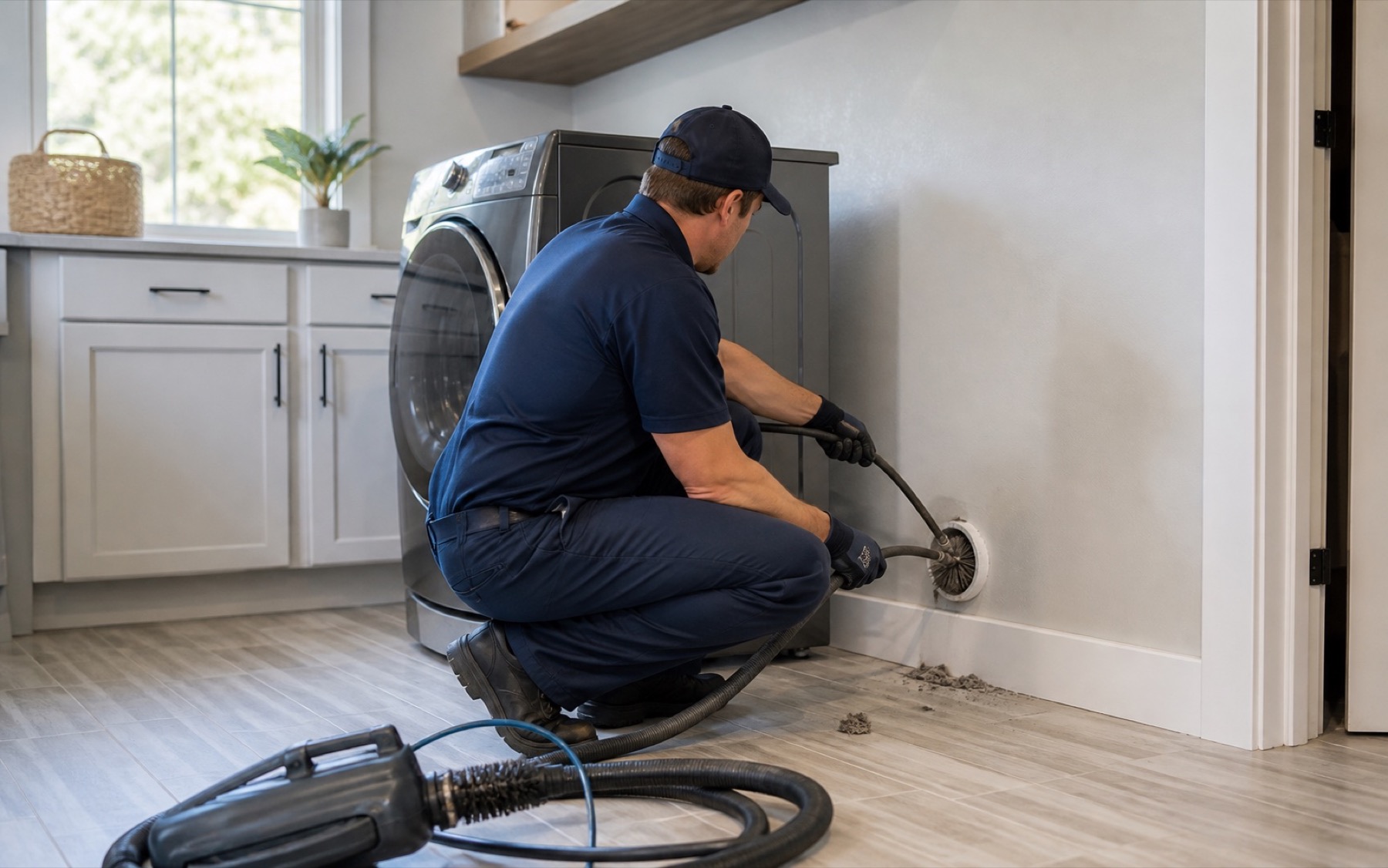
A useful service begins by identifying the dryer connection, accessible route and termination. Professional tools loosen and collect lint, then airflow and visible conditions are reviewed.
Cleaning cannot correct every defect. Disconnected joints, crushed transition hoses, damaged ducts or an unsuitable termination may require repair or access beyond the cleaning scope.
- Inspect accessible connections
- Clean the exhaust run with suitable tools
- Confirm discharge at the termination
- Report visible routing or damage concerns
Treat longer drying time as useful information. Early cleaning and inspection can restore airflow and help reduce heat and lint-related risk.