How each system supplies hot water
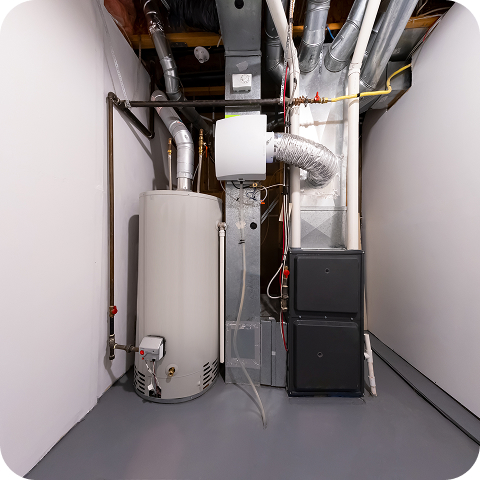
A storage water heater keeps a fixed volume of water hot and reheats it as needed. Capacity depends on tank size and recovery rate. A tankless unit heats water as it flows through the appliance, so it does not run out in the same way—but every model still has a maximum flow rate.
Simultaneous showers, laundry, dishwashing and incoming winter water temperature all affect demand. A system that looks adequate by household size alone can still disappoint if peak use is not considered.
- Storage tank: fixed volume plus recovery
- Tankless: continuous operation within its maximum flow
- Both require sizing for real household habits
Installation requirements
A like-for-like tank replacement is often straightforward, although venting, drainage, valves and seismic requirements still matter. Converting to tankless may require a larger gas line, new venting, condensate drainage, electrical power and changes to water piping.
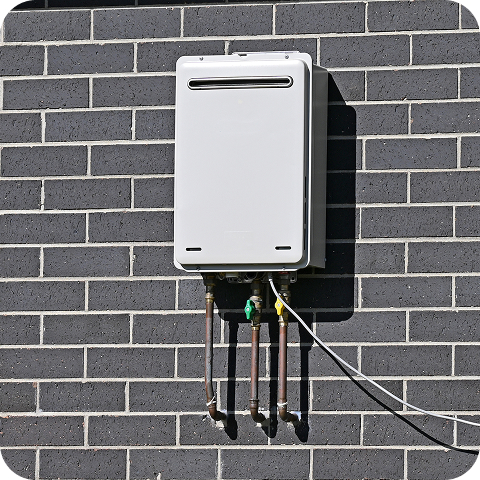
The wall-mounted cabinet saves floor space, but the mechanical requirements do not disappear. Service clearances and future access should be planned before the installation location is finalized.
- Confirm gas capacity before selecting a unit
- Plan vent and condensate routes
- Keep isolation valves and service access usable
Efficiency and maintenance
Tankless equipment avoids storing a large volume of hot water, but real savings depend on usage and system design. Storage models vary widely in insulation, recovery and efficiency.
Both systems need maintenance. Tankless heat exchangers may require descaling. Storage tanks should be monitored for corrosion, leakage, venting and safety-device condition. Water quality can affect service needs for either option.
- Follow the manufacturer’s maintenance schedule
- Address hard-water scale before performance declines
- Do not ignore error codes, leakage or unstable temperatures
A sensible decision process
Start with peak hot-water use, available fuel and electrical capacity, space and budget. Then compare the complete installed cost, expected maintenance and desired service life.
If the existing tank has failed urgently, a direct replacement may restore service faster. If the project is planned, there is more time to assess a tankless conversion, heat-pump water heating or other options.
- Measure demand before choosing capacity
- Compare like-for-like replacement with conversion scope
- Plan before failure when possible
Size for peak demand and compare the full installation—not only the appliance price or the promise of continuous hot water.